Join us as we sit down with the game designer for The Lord of the Rings: The Two Towers™ Trick-Taking Game, Bryan Bornmueller! Bryan is a huge admirer of The Lord of the Rings™, by acclaimed author J.R.R. Tolkien, and he really brings the works into a new light with his narrative trick-taking game.
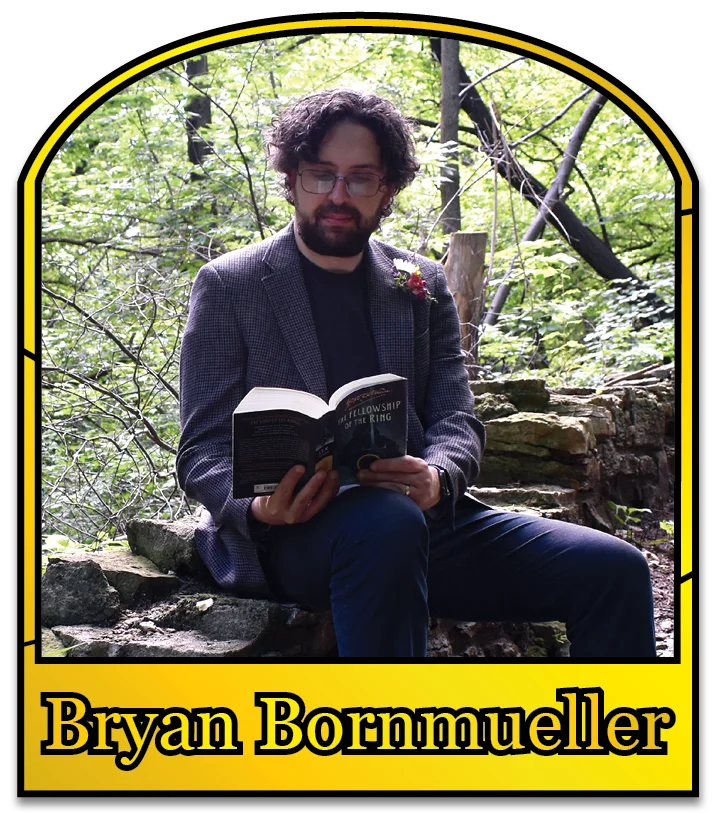
First and foremost, congratulations on the success of the first game in the series, The Lord of the Rings: The Fellowship of the Ring™ Trick-Taking Game! What have been some stand-out moments for you with all the praise the game is receiving?
It’s incredibly gratifying that so many people are playing the game. Being selected by the
community on BoardGameGeek to win Best Cooperative Game this year for the Golden Geek is such an honor. I’ve spent over 2 decades on BGG and being recognized feels great. It has also been wonderful getting emails and messages from folks who’ve played the game including people who were customers who remember me back when I was working in a games store in high school.
This is the second installment of The Lord of the Rings™ Trick-Taking series, The Two Towers™. Do you have a favorite moment from the second book and did it make it into the game?
The Two Towers is my favorite of the 3 books so there were a ton of things I wanted to be sure to include. I think I am most proud of how Treebeard, one of my favorite characters, translated into the game. The Ents are so special and unlike anything previously shown in the story that I really wanted that feeling to come across in the game mechanics.

Is it tricky to create a game that follows the story faithfully, without including every little detail, of which Tolkien is known to provide a lot of?
I feel that the details of the world of Middle-earth and the story is what separates The Lord of the Rings from so many other stories, so capturing those details, whenever possible, is vitally important. The tricky part in adapting the story to Trick-taking is keeping the pacing of the chapters fun and interesting while still being very faithful. For example, I needed to have a chapter to re-introduce Gandalf as Gandalf the White and came upon a fun mechanic highlighting the part of the story where Aragorn, Legolas, and Gimli are not sure if it is Saruman the White or Gandalf the White.

As mentioned, this is the second title in the series. What’s new in this game that is different from the first?
When approaching the design, I tried very much to view The Two Towers Trick-Taking Game as a sequel first and foremost. It is a continuation of what we did in The Fellowship of the Ring Trick-Taking Game, not just more of the same but also with enough resemblance that fans of the first game feel comfortable. To reflect this, the chapter numbers in The Two Towers pick up where The Fellowship of the Ring Trick-Taking Game left off with the first chapter of The Two Towers Trick-Taking game by Chapter 19.
The differences between the games are very much inspired by the differences between the books The Two Towers Trick-Taking Game very much has 2 distinct parts, the first focused on Aragorn’s attempt to rescue Merry and Pippin, meeting Treebeard, Gandalf’s return, and the events in Rohan and Helm’s Deep. The Rings cards and The One Ring are not in this part of the game. In their place are special Orcs cards (which players much work around) and two Towers cards (powerful cards without a suit). In the second part we shift focus back to Frodo and Sam and change the deck makeup to return focus to the Rings cards and new Weariness (a difficult card that causes you to give up the lead). We also get the arrival of Sméagol and Gollum who play a huge role in the rest of the story.
The game does not require players to own or even have played The Fellowship of the Ring Trick-Taking Game, though we assume most people will play The Fellowship of the Ring first. The Two Towers includes the four main suit cards, like The Fellowship of the Ring, but with all new artwork thematic to The Two Towers, so the Hills suit now depicts the Hills of Rohan instead of the Shire.

There are 18 chapters this time around. Was there a favorite chapter you designed or are most excited for players to experience?
Being a sequel, I wanted there to be much more variety in gameplay from The Fellowship of the Ring with bigger variations chapter by chapter. I am especially pleased with how Chapter 35 Shelob turned out.
We talked about Easter eggs last time as well. Are there some nods to things that Tolkien fans will be excited to discover are in the game?
I am really pleased we were able to get Elaine Ryan to do an amazing illustration of one of my favorite images from The Lord of the Rings (Frodo and Sam at the Crossroads) for the Shadows card in the main deck.
What tips and tricks do you have for people for mastering trick-taking, especially as concerns this game series?
Don’t Give Up
Just because the first few tricks don’t go your way, keep going. If you haven’t failed a goal, not all is lost. Often you can make some clever moves once you’ve learned a lot about each other’s hands from what has been played. Be like Frodo and keep going even when things get challenging!
Choose your character carefully
Your choice of character is the most important choice of each round. The character you pick will give the other players information about your hand. Pick the hardest character you think you can accomplish and be mindful of what players after you will be forced to take. In “Long” chapters make sure you are not leaving all of the hardest characters for the last round. Also make sure everyone knows all of the characters in play each round and their goals and are not just focused on themselves.
Use your setup actions carefully
Each character’s setup actions are critical to your success each round and should not be overlooked. Use them to build your hand and to communicate with other players. You can get rid of your last card in a suit, get other players critical cards, or communicate where you are strong or weak. Also pay attention to other players’ setup action

Make a plan before you deal
If you are really struggling with a chapter, talk through some strategy ideas before you deal: Which characters are the hardest? What cards would help them? What sort of hand might be good with each character?
Help the Person who chose a character last
The player who picked a character last had fewer choices (or maybe no choice), so make sure to help them. Notice when you can exchange with a character who can’t exchange and help that character.
Don’t take tricks just because you can.
Always move toward achieving someone’s goal as there are a limited number of tricks each round.
Complete the harder goals first.
If you can complete a hard goal early, take care of that and let the easier goals wait until later in the round.
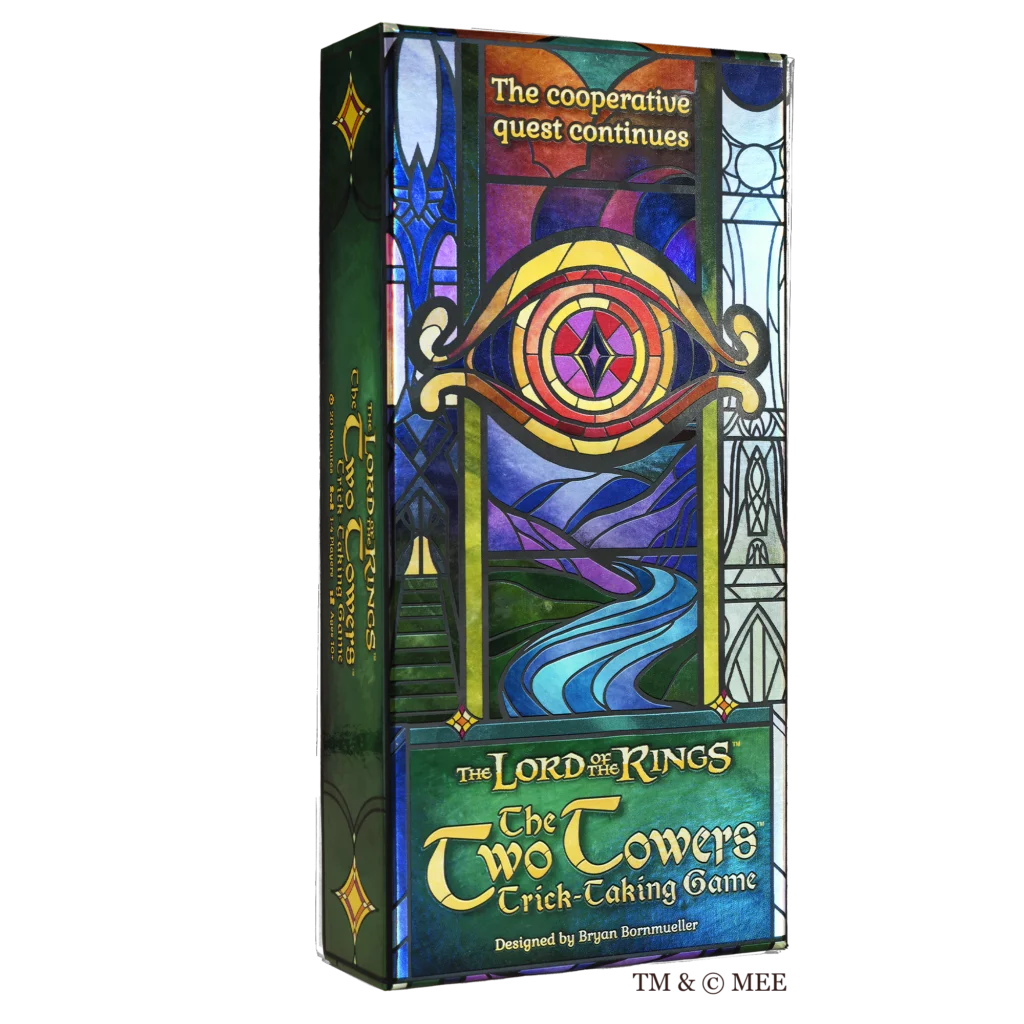
Thank you again to Bryan for taking time to sit with us and answer our questions! And thank you for reading and remember to get your copy of The Two Towers Trick-Taking Game at your local game store or online.